


Ejari for Hotel Apartments in Dubai, When It’s Possible, and the Approval Path Most Owners Miss
For years, Dubai investors have been told the same thing: “Hotel apartments can’t get Ejari.” That statement is not always true — and it has cost owners months of rental income, reduced tenant demand, and forced many landlords into the short-stay market even…
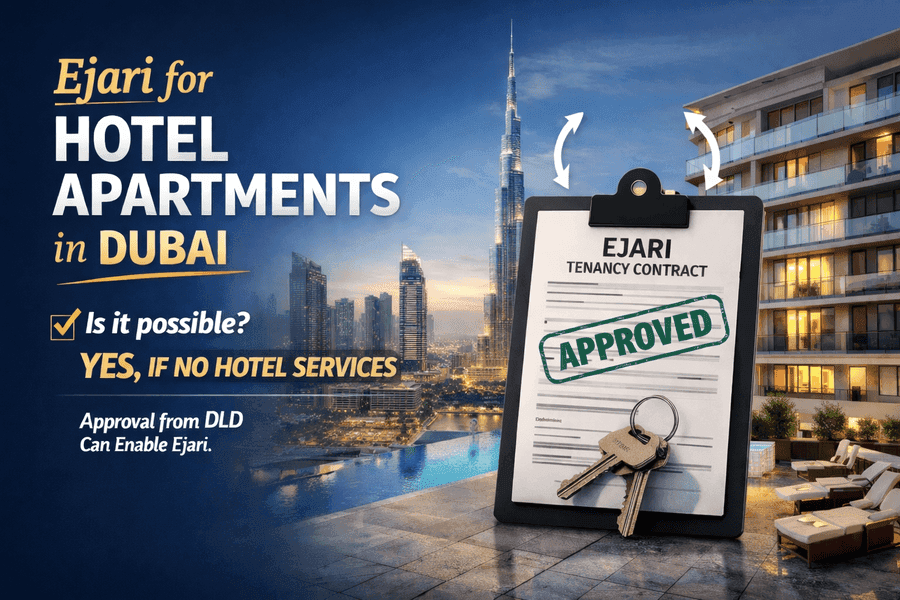
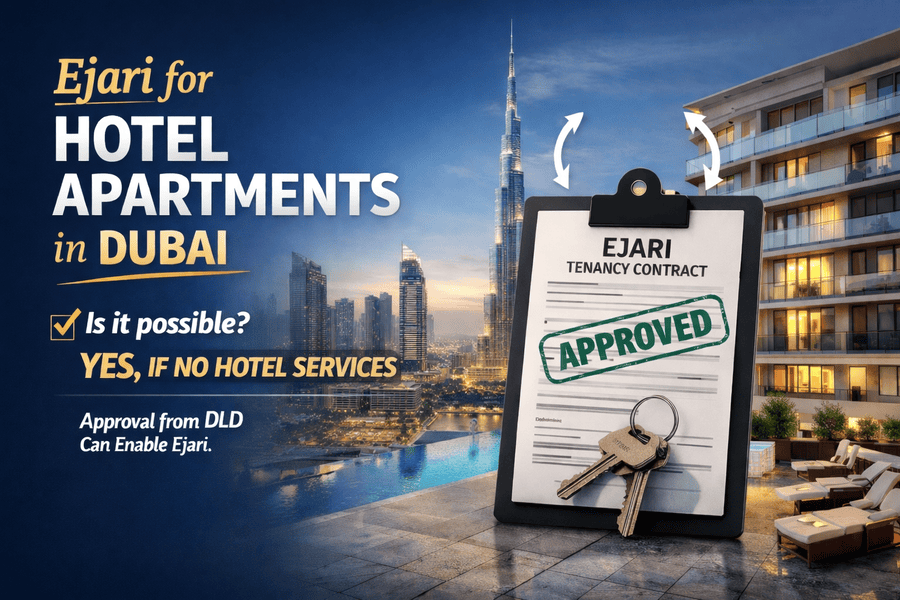
For years, Dubai investors have been told the same thing:
“Hotel apartments can’t get Ejari.”
That statement is not always true — and it has cost owners months of rental income, reduced tenant demand, and forced many landlords into the short-stay market even when they didn’t want to.
Here’s the real rule:
If your hotel apartment unit does not operate with hotel services, you can request approval from Dubai Land Department (DLD) to allow Ejari registration.
And once DLD confirms the unit’s status with Dubai Department of Economy & Tourism (DET), Ejari can be enabled.
This guide explains exactly how it works, who qualifies, what blocks Ejari, and how investors should protect themselves before buying.
Why Ejari Matters for Hotel Apartment Owners
Ejari isn’t just “a certificate.”
In Dubai, Ejari is the difference between:
-
attracting corporate tenants vs. losing them
-
renting in weeks vs. sitting vacant for months
-
renting at market price vs. discounting due to limited demand
Many tenants require Ejari for practical reasons like:
-
tenancy compliance
-
residency processes
-
proof of address requirements
-
long-term leasing documentation
So when an owner is blocked from Ejari, the unit becomes harder to rent long-term — and that’s where the investor pain begins.
The Real Problem: “Hotel Apartment” Is a Title… Not Always an Operation
Dubai has thousands of units that are legally titled as hotel apartments but in reality, they function like normal residential apartments.
The market mistake is assuming that the title alone decides Ejari.
It doesn’t.
What actually decides Ejari is whether your unit is treated as part of a hospitality operation, meaning:
Hotel apartment units that usually get blocked
If your unit is linked to any of the following, Ejari is typically restricted:
-
hotel services (cleaning, concierge, linen, reception-style operation)
-
short-term guest rotation
-
inventory controlled by an operator
-
holiday home style licensing or tourism activity
Hotel apartment units that can be approved for Ejari
Ejari is often possible when:
-
the unit is owner-controlled
-
the unit is leased long-term (typical 1-year tenancy)
-
the unit does not include hotel services
-
the unit is not operating as a tourism rental product
This is the category most investors don’t know exists — and it’s exactly where your experience fits.
The Hidden Route: How Owners Get Ejari for Hotel Apartments
If your unit is blocked in the system, the solution is not arguing with agents, trustees, or typing random things into the portal.
The correct path is:
Step 1: Contact DLD for “Hotel Apartment Ejari” approval
Owners can request permission from DLD to enable Ejari for their hotel apartment unit.
You mentioned the practical route many owners use:
hotelapartment.ejari@dubailand.gov.ae
Step 2: DLD checks the unit status with DET
DLD verifies the classification and operating status of the unit with Dubai Department of Economy & Tourism (DET).
This step is crucial because DET regulates tourism and hospitality inventory.
Step 3: Once approved, Ejari becomes possible
After approval, the unit is allowed to proceed through standard Ejari registration.
Why This Is a Big Deal (And Why the Market Doesn’t Know)
This topic isn’t widely discussed because:
-
most agents don’t handle compliance
-
most investors assume the answer is simply “no”
-
hotel apartment projects are often sold as “investment products,” but the rental realities aren’t explained
So owners only discover the issue after purchase — when they try to lease the unit and realize:
“I can’t register Ejari… so I can’t rent it to the tenant I want.”
That’s not a small inconvenience.
That’s a direct hit to yield.
What This Means for Investors (Yield, Vacancy, and Exit Value)
If your unit cannot obtain Ejari, you instantly lose a large part of the long-term tenant market — especially:
-
corporate tenants
-
families
-
residents needing formal documentation
That creates 3 investor consequences:
1) Higher vacancy risk
You may wait longer for the “right” tenant.
2) Pricing pressure
To compensate for limited demand, some owners drop rent.
3) Resale impact
A unit that cannot do Ejari is less attractive to end users and long-term investors.
That’s why this topic is not “technical.”
It’s financial.
Common Mistakes Owners Make (And How to Avoid Them)
Mistake 1: Assuming the unit is automatically eligible
Even if your building feels residential, the system may still classify it differently.
Mistake 2: Listing the unit before confirming Ejari eligibility
This wastes time and burns tenant leads.
Mistake 3: Mixing short-stay and long-term strategies
If the unit is used like a holiday home, it becomes harder to justify long-term tenancy treatment.
Mistake 4: Buying without due diligence
Before purchasing a hotel apartment unit, investors should confirm:
-
is Ejari possible?
-
does the unit have hotel services?
-
is there an operator controlling inventory?
A Simple Investor Checklist (Before You Buy)
If you’re buying a hotel apartment unit in Dubai, ask these questions before paying:
-
Can this unit be rented on a 1-year tenancy contract?
-
Is Ejari allowed for this building?
-
Is the unit tied to hotel services?
-
Is there a management agreement that controls rental usage?
-
Can the owner opt out of hospitality operation?
If the seller can’t answer clearly, treat it as a risk.
FAQs
Can hotel apartments in Dubai get Ejari?
Yes, in some cases. If the unit does not include hotel services and is treated as a long-term rental asset, DLD may approve Ejari after confirming status with DET.
Why do some hotel apartment units get blocked from Ejari?
Because they are treated as hospitality inventory or tourism-style rental units, not residential tenancy assets.
What is the approval process for Ejari in a hotel apartment?
Owners can contact DLD for approval, DLD verifies the unit status with DET, and once approved the unit becomes eligible for Ejari registration.
Does the title deed saying “hotel apartment” automatically block Ejari?
Not always. The operational classification matters more than the wording on the title.
Is this issue common in Dubai?
Yes — and it’s one of the most misunderstood compliance topics for investors in serviced and hotel apartment projects.
Final Word: This Is Not a “Small Detail,” It’s a Yield Issue
Dubai’s hotel apartment segment can be profitable — but only if investors understand the difference between:
A hospitality product
vs.
A long-term tenancy asset
If your unit is the second type (no hotel services), Ejari is not a fantasy — it’s achievable, and the DLD approval route is the key.
If you own a hotel apartment unit and want to rent it long-term, confirm Ejari eligibility before listing the unit. It saves time, protects your asking rent, and prevents deal collapse with serious tenants.